
Offshore casinos give US players access to international gaming platforms that operate outside state-based regulation while still accepting American customers. These sites are typically licensed in overseas jurisdictions and often combine casino games, sportsbooks, and flexible payment systems under one account.
The appeal goes beyond large welcome offers. Many players are drawn to broader bonus structures, cryptocurrency support, higher withdrawal limits, and fewer geographic restrictions compared to some domestic options. That added flexibility is usually the deciding factor.
However, platform quality varies. Payment reliability, clear bonus terms, customer support responsiveness, and operating history matter far more than promotional size. This page highlights established offshore casinos that demonstrate consistent payouts, stable systems, and practical long-term usability for real money players.
List of the Best Offshore Casinos: Our Top Picks












The Top 10 Offshore Casinos Right Now
The platforms below represent a mix of long-standing operators and modern crypto-driven brands. Each offshore casino listed here accepts US players and stands out for a specific strength, whether that is bonus value, payment flexibility, sportsbook integration, or loyalty rewards.
- Raging Bull – Large Welcome Bonus And Strong US Player Reputation
- TheOnlineCasino – Balanced Bonus Structure With Broad Game Selection
- CoinPoker – Crypto-Focused Platform With Integrated Poker Room
- VoltageBet – Modern Hybrid Casino And Sportsbook Platform
- BetUS – Established Offshore Brand With Deep Betting Markets
- Lucky Bonanza – Simple Bonus Terms And Slot-First Layout
- Slots And Casino – Casino-Only Platform With Structured Promotions
- Bovegas – Large Slot Library And Frequent Cashback Offers
- Shazam – Straightforward Platform With Competitive Match Bonuses
- DuckyLuck – Player-Friendly Loyalty System And Ongoing Reloads
Best Offshore Casinos Reviewed
Below, we break down three of the most prominent offshore casinos from our list. Each review focuses on how the platform performs beyond the welcome offer, including payments, usability, and long-term value.
1. Raging Bull – Large Welcome Bonus And Strong US Player Reputation

Raging Bull is one of the more established names in the offshore casino space, particularly for US players who prioritize structured bonuses and predictable promotional cycles. The platform is casino-first, meaning everything revolves around slots, table games, and ongoing deposit incentives rather than sportsbook features. That focus makes the experience straightforward. You log in, find the games quickly, and see promotions clearly displayed without digging through layers of menus.
Where Raging Bull stands out is its multi-tier bonus system. Instead of a single deposit match, it spreads value across several deposits, often combining match percentages with free spins. This structure rewards players who deposit consistently rather than those who want a one-time large bonus. However, like most casinos, wagering requirements and maximum withdrawal caps should be reviewed carefully before claiming offers.
The game library is heavily slot-focused, featuring popular software providers alongside in-house titles. Live dealer options are available, though the emphasis is clearly on slots and bonus-driven play. If you prefer a sportsbook-casino hybrid, this may feel limited. If you are primarily a slot player, the layout and promotion structure make sense.
On the banking side, Raging Bull supports credit cards and cryptocurrency. Crypto withdrawals are generally processed faster and with fewer friction points than card payouts. For US players concerned about reliability, its long operating history in the offshore market is one of its strongest assets.
Pros
- Large Multi-Deposit Welcome Packages
- Strong Reputation Among US Players
- Regular Reload And Cashback Offers
- Crypto Withdrawals Available
Cons
- Wagering Requirements Can Be High
- Maximum Cashout Limits On Some Bonuses
- Slot-Heavy Game Focus
2. TheOnlineCasino – Balanced Bonus Structure With Broad Game Selection
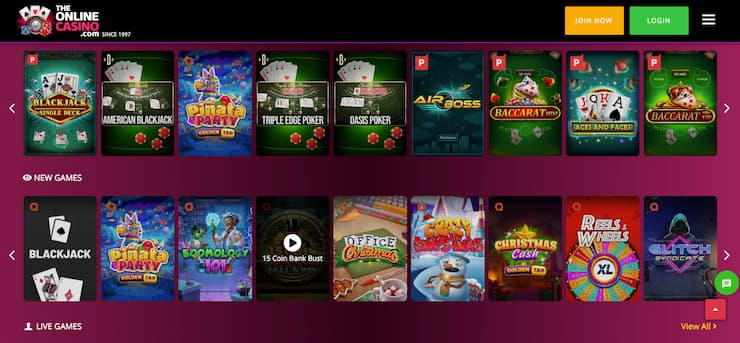
TheOnlineCasino takes a more balanced approach compared to some aggressive bonus-driven platforms. It does not overwhelm new players with oversized promotional banners. Instead, it spreads incentives across deposit tiers while keeping bonus explanations relatively clear. That balance appeals to players who want structured offers without extreme rollover terms.
The game selection is broader than many traditional offshore casino brands. Alongside slots, you will find table games, video poker, and live dealer titles presented in a clean, easy-to-navigate layout. The interface is not flashy, but it is functional. Pages load quickly, categories are clearly labeled, and the cashier is accessible without unnecessary redirects.
One of the more practical aspects of TheOnlineCasino is how it handles payments. It supports card deposits and several cryptocurrency options. Withdrawal times depend on the method selected, but digital assets tend to move faster. The key advantage here is consistency rather than speed marketing. The site has maintained relatively stable payout patterns over time.
For players who want something less promotional-heavy and more operationally steady, this platform offers a middle ground. It may not have the loudest bonuses among casinos, but it compensates with usability and balanced long-term play conditions.
Pros
- Clear Tiered Bonus Structure
- Wide Range Of Game Categories
- Functional And Simple Interface
- Crypto Payment Support
Cons
- Not The Largest Welcome Offer
- Withdrawal Speeds Vary By Method
- Limited High-Stakes Focus
3. CoinPoker – Crypto-Focused Platform With Integrated Poker Room

CoinPoker operates differently from traditional casinos. Its core identity is rooted in cryptocurrency and peer-to-peer poker rather than high-volume deposit bonuses. While it includes casino games, the poker ecosystem is the main attraction. That distinction makes it a strong option for players who prioritize poker liquidity and crypto efficiency over promotional stacking.
Everything on CoinPoker revolves around digital assets. Deposits and withdrawals are processed in crypto, which removes much of the friction associated with card processing. For players already comfortable using digital wallets, the experience is direct and streamlined. There are no complicated cashier workflows or traditional banking delays.
The poker platform itself includes cash games, tournaments, and sit-and-go formats, with a growing global player pool. Casino games are available as a secondary feature, giving players access to slots and table titles between poker sessions. It is not built like a bonus-heavy offshore casino site. Instead, it feels more like a crypto-native gaming platform.
For US players who prefer crypto-only environments, CoinPoker offers something distinct. It does not compete on oversized welcome matches. It competes on transaction efficiency, blockchain integration, and poker functionality.
Pros
- Fully Crypto-Based Transactions
- Integrated Online Poker Room
- Faster Withdrawal Processing
- Clean And Modern Interface
Cons
- Limited Traditional Payment Options
- Smaller Bonus Focus
- Poker-Centric Rather Than Casino-First
What Are Offshore Casinos?
Offshore casinos are online gambling platforms that operate under international gaming licenses rather than licenses issued by individual US states. The term “offshore” simply means the company is based and regulated outside the United States. These sites legally operate in jurisdictions that permit online gambling businesses to serve international customers.
Common licensing locations include Curacao, Panama, Costa Rica, and Anjouan. Each of these jurisdictions has its own regulatory framework, compliance requirements, and operational standards. While they do not fall under US state gaming commissions, they are licensed in the regions where they are incorporated and are allowed to accept players from countries where access is not explicitly restricted.
The key difference between offshore casinos and state-licensed US casinos comes down to regulation and structure. State-regulated platforms operate within a specific state boundary and follow strict local rules regarding bonuses, payment methods, tax reporting, and player protections. Offshore casinos operate under international oversight, which often allows them to offer larger bonuses, broader cryptocurrency support, and access to players in states where regulated online casinos are not available.
US players typically use offshore casinos for practical reasons. Some live in states without legal online casino options. Others prefer higher withdrawal limits, more flexible bonus structures, or the ability to use digital assets like Bitcoin and USDT. The appeal is generally tied to access and flexibility rather than geography itself.
Why US Players Choose Offshore Casinos
The decision to use offshore casinos is rarely about novelty. It is usually about flexibility. Players compare limits, bonuses, and payment options, then choose the environment that aligns with how they prefer to play. For many US users, that comparison often leads toward offshore casinos because of structural differences rather than marketing claims.
Larger Bonus Structures
One of the most visible differences is bonus size. Offshore platforms tend to advertise larger deposit matches and extended promotional packages. That is partly because they are not bound by the same state-level promotional restrictions that apply to regulated US operators.
State-licensed casinos often limit match percentages, cap maximum bonus amounts, or restrict how promotions can be structured. Offshore casinos typically have more freedom to design multi-deposit packages, reload cycles, cashback systems, and loyalty rewards. The result is not always better value, but it is often larger in scale. Players who enjoy bonus-driven play are naturally drawn to that flexibility.
Crypto Payment Flexibility
Cryptocurrency has become a major factor in why US players choose offshore casinos. Many state-regulated platforms do not support Bitcoin, USDT, or Ethereum directly. International platforms, by contrast, frequently integrate crypto into their cashier systems.
For players, crypto matters for practical reasons. Transactions are often processed faster, especially for withdrawals. Fees can be lower than some traditional banking methods. There is also less friction from card declines or intermediary processing blocks. Players who are already comfortable using digital wallets often prefer this streamlined approach.
Crypto does not automatically guarantee speed or reliability, but offshore casinos tend to build their systems around it rather than treating it as an add-on option.
Higher Withdrawal Limits
Another factor is withdrawal structure. State-regulated casinos frequently impose strict per-day, per-week, or per-transaction caps. These limits are part of regulatory compliance and internal risk management.
Offshore casinos often provide higher payout ceilings, particularly for players using cryptocurrency or bank transfers. While processing times can vary, the overall structure is sometimes more accommodating for higher-volume players. For users who wager larger amounts or prefer fewer withdrawal requests, that difference matters.
Fewer Geographic Restrictions
Finally, access plays a significant role. Not every US state has legalized online casino gaming. Players in restricted states may not have a regulated local option at all.
Because offshore casinos operate internationally, they can accept players from states where online casino legislation has not passed. For many users, the decision is less about comparing regulated versus offshore casinos and more about having access versus having none.
Are Offshore Casinos Legal in the United States?
The legality of offshore casinos in the United States is shaped by the distinction between federal law and state regulation. Gambling laws in the US are not controlled by a single national licensing body. Instead, individual states decide whether to legalize and regulate online casino gaming within their borders.
At the federal level, two laws are commonly referenced in discussions about online gambling. The Federal Wire Act was originally enacted to address interstate sports betting conducted over telephone lines. Its scope has been debated over the years, but it does not explicitly criminalize individual players for accessing online casino platforms. The second is the Unlawful Internet Gambling Enforcement Act. This law focuses primarily on payment processing restrictions related to unlawful online gambling businesses. It does not create a federal offense for individuals who place bets online.
Offshore casinos operate legally in the jurisdictions where they are licensed. Common regulatory locations include Curacao, Panama, Costa Rica, and Anjouan. In those regions, operators are permitted to provide online gaming services to international customers, subject to local licensing rules. That means the company itself is regulated under foreign law rather than US state law.
For US players, enforcement has historically focused on operators rather than individuals. There are no widely documented cases of US residents being prosecuted simply for playing at offshore casinos. The legal risk discussion generally centers on the business side of online gambling, not the end user.
The key distinction is between operating a gambling platform within the United States and accessing one that is based abroad. States regulate companies that want to offer licensed services locally. Offshore casinos, by contrast, operate outside state systems. Players choose between regulated in-state platforms where available or internationally licensed options that accept US customers.
How We Evaluate Offshore Casinos
Choosing between offshore casinos requires more than comparing bonus percentages. We use a structured framework that focuses on operational consistency, payment behavior, and long-term reliability. Below is the methodology we apply when assessing each platform.
Licensing And Operating History
The first step is verifying where the casino is licensed and how long it has been active. Longevity matters. Platforms that have operated for several years without repeated shutdowns or ownership changes generally demonstrate more stability.
We evaluate:
- Licensing jurisdiction and validity
- Public company information where available
- Length of time serving US players
- History of rebranding or domain changes
- Visible compliance documentation
While offshore casinos are not regulated by US state commissions, established international licensing combined with operational history is a strong indicator of platform consistency.
Payment Reliability
Payment performance is one of the most important evaluation criteria. Promotional value means little if withdrawals are inconsistent.
We review:
- Available deposit methods
- Cryptocurrency support and wallet integration
- Average withdrawal processing time
- Reported payout patterns
- Transparency around withdrawal limits
We also compare traditional banking methods versus crypto processing speeds. In many offshore casinos, digital assets offer fewer friction points than card-based systems.
Bonus Transparency
Large bonuses are common in this space, but clarity matters more than size. We assess how clearly wagering requirements, maximum cashout rules, and eligibility conditions are presented.
Key factors include:
- Wagering requirements explained upfront
- Maximum withdrawal limits clearly stated
- Game contribution percentages disclosed
- Expiration periods outlined
- Fair promotional cycles without hidden resets
Casinos that bury bonus conditions deep within terms pages score lower in our evaluation.
Customer Support Testing
Support quality can quickly separate reliable platforms from weaker ones. We examine response speed and clarity rather than scripted replies.
Our review process includes:
- Live chat accessibility
- Email response time
- Availability hours
- Help center quality
- Issue resolution consistency
Reliable casinos typically provide 24/7 chat access with clearly explained payment procedures.
Game Provider Quality
Finally, we analyze the software ecosystem. A strong platform partners with recognized game providers and maintains consistent platform performance.
We look at:
- Variety of slot providers
- Live dealer availability
- Table game depth
- Platform stability under load
- Mobile compatibility
To summarize our evaluation framework:
| Category | What We Prioritize |
| Licensing | Jurisdiction Validity And Longevity |
| Payments | Withdrawal Consistency And Crypto Support |
| Bonuses | Transparency And Fair Terms |
| Support | Response Speed And Resolution Quality |
| Games | Provider Reputation And Platform Stability |
Banking Methods at Offshore Casinos
Banking flexibility is one of the main reasons players choose offshore casinos. Payment options tend to be broader than many state-regulated platforms, especially when it comes to cryptocurrency and higher withdrawal ceilings. That said, each method comes with trade-offs in terms of approval rates, processing times, and potential fees.
Understanding how these systems work helps set realistic expectations before depositing.
Credit And Debit Cards
Credit and debit cards remain widely accepted across offshore casinos, particularly Visa and MasterCard. Deposits are usually processed instantly if approved, which makes cards one of the most convenient options for getting started quickly.
However, approval rates can vary. Some US banks flag or decline transactions tied to international gaming operators. When that happens, players may need to contact their bank or switch to an alternative method. This is one of the main friction points with card-based deposits at offshore platforms.
Withdrawals to cards are often slower than deposits. Processing times may include internal review periods before funds are released. In some cases, casinos require players to withdraw via a different method than the original deposit.
Cards are practical for small to mid-sized deposits but are not always the fastest payout option.
Cryptocurrency
Cryptocurrency has become central to the cashier systems of many offshore casinos, especially across modern crypto casinos that focus on blockchain-based payments. Bitcoin, USDT, Ethereum, Litecoin, and other digital assets are commonly supported.
From a speed perspective, crypto withdrawals are often faster than traditional banking methods. Once approved internally, transactions are broadcast to the blockchain and confirmed within minutes to a few hours, depending on network traffic.
Fees are typically lower compared to wire transfers or certain card processors, although blockchain network fees still apply. Another advantage is reduced transaction friction. Because crypto does not rely on US banking institutions, declined deposits are less common.
For players comfortable using digital wallets, cryptocurrency often provides the most efficient balance between speed, privacy, and reliability.
Wire Transfers And Alternatives
Wire transfers are generally used by higher-limit players. While slower than crypto, they allow for larger transaction amounts and fewer per-transaction caps.
Processing times can take several business days depending on intermediary banks. Fees may apply on both the sending and receiving side, which makes wires less attractive for smaller withdrawals.
Some casinos also offer alternative methods such as prepaid cards or payment intermediaries. Availability varies by platform, but these options are typically designed to bridge the gap between traditional banking and crypto.
Payment Method Comparison
| Method | Deposit Speed | Withdrawal Speed | Fees | Best For |
| Credit/Debit Cards | Instant If Approved | Moderate To Slow | Possible Bank Fees | Quick Deposits |
| Cryptocurrency | Near Instant | Fast After Approval | Low Network Fees | Faster Withdrawals |
| Wire Transfer | 1–3 Business Days | Several Business Days | Bank Fees Possible | High-Value Transactions |
The right method depends on your priorities. Players focused on speed often prefer cryptocurrency, while those who value familiarity may stick with cards. High-limit users may lean toward wire transfers. Offshore casinos typically support all three, allowing players to choose based on convenience and transaction size.
Pros And Cons of Offshore Casinos
Every platform model comes with trade-offs. Internationally licensed sites offer flexibility and larger promotional structures, but they also operate outside US state oversight. The table below outlines the key advantages and limitations to consider before registering.
| Advantages | Disadvantages |
| Bigger Welcome And Reload Bonuses | No US State Regulatory Oversight |
| Strong Cryptocurrency Support | Payout Speeds Vary By Method |
| Fewer Geographic Restrictions | Bonus Cashout Caps May Apply |
| Higher Deposit And Withdrawal Limits | Dispute Resolution Handled Internationally |
| Broader Game And Sportsbook Access | Card Deposits Can Be Declined By Banks |
This comparison helps clarify whether flexibility, bonus scale, and crypto support outweigh the trade-offs in regulatory structure and payment variability.
Offshore Casinos vs State-Regulated Casinos
Understanding the structural differences between internationally licensed platforms and state-approved operators helps set realistic expectations. The two models function under different regulatory frameworks, which directly impacts bonuses, payments, game availability, and access.
State-regulated casinos operate within clearly defined state borders and must comply with local gaming commissions. International platforms operate under foreign licensing bodies and can accept players from multiple US states, subject to their own jurisdictional rules.
Below is a direct comparison of the core differences:
| Feature | Offshore | State-Licensed |
| Bonuses | Larger | Smaller |
| Crypto | Widely Available | Rare |
| Game Variety | Broad | Restricted By State |
| Player Protections | Jurisdiction-Based | State Commission |
| Access | Nationwide | State Limited |
The most visible difference is promotional structure. International platforms often advertise larger deposit matches and extended bonus cycles because they are not bound by state-imposed promotional caps. Regulated casinos tend to offer smaller but more tightly controlled incentives.
Cryptocurrency support is another major distinction. State-approved platforms rarely integrate Bitcoin or stablecoins directly into their cashier systems. By contrast, many internationally licensed sites build their payment infrastructure around digital assets.
Game availability can also vary. State operators must partner with approved providers, which can limit variety. International platforms often feature a broader mix of software studios and hybrid sportsbook integrations.
Finally, access plays a defining role. State-regulated casinos are only available within their licensed jurisdiction. International platforms can be accessed from states without regulated online casino options.
Choosing between the two models ultimately depends on whether a player prioritizes local regulatory oversight or broader operational flexibility.
Who Should Use Offshore Casinos?
These platforms suit players who value flexibility and access over state-based regulation.
- Crypto-First Players
If you prefer using Bitcoin, USDT, or Ethereum, international sites typically offer smoother deposits and faster withdrawals through digital wallets. - High-Limit Players
Larger transaction ceilings and fewer payout caps can benefit players who wager more and prefer bigger withdrawals. - Players in Restricted States
If your state does not offer regulated online casino gaming, these platforms provide access where local options are unavailable. - Poker-Focused Users
Some sites combine casino games with integrated poker rooms, making them convenient for players who want both under one account.
Responsible Gambling
Online casino gaming should always be approached as entertainment, not a source of income. Set clear limits before you deposit, decide how much time you plan to spend, and avoid chasing losses. If gambling stops feeling enjoyable or starts affecting your finances or daily life, it may be time to pause.
Support is available if you need it. Confidential help and educational resources are offered through the organizations below:
Final Verdict: Which Offshore Casino Stands Out?
After comparing bonuses, payment flexibility, platform stability, and long-term reputation, Raging Bull stands out as the strongest overall option on this list.
It earns the top position because of its consistent track record with US players, structured multi-deposit bonus packages, and reliable cryptocurrency payout options. While wagering requirements should always be reviewed carefully, the platform combines promotional scale with operational stability better than most competitors.
For players prioritizing a casino-first experience with strong bonus cycles and dependable payment processing, Raging Bull delivers the most balanced overall package.